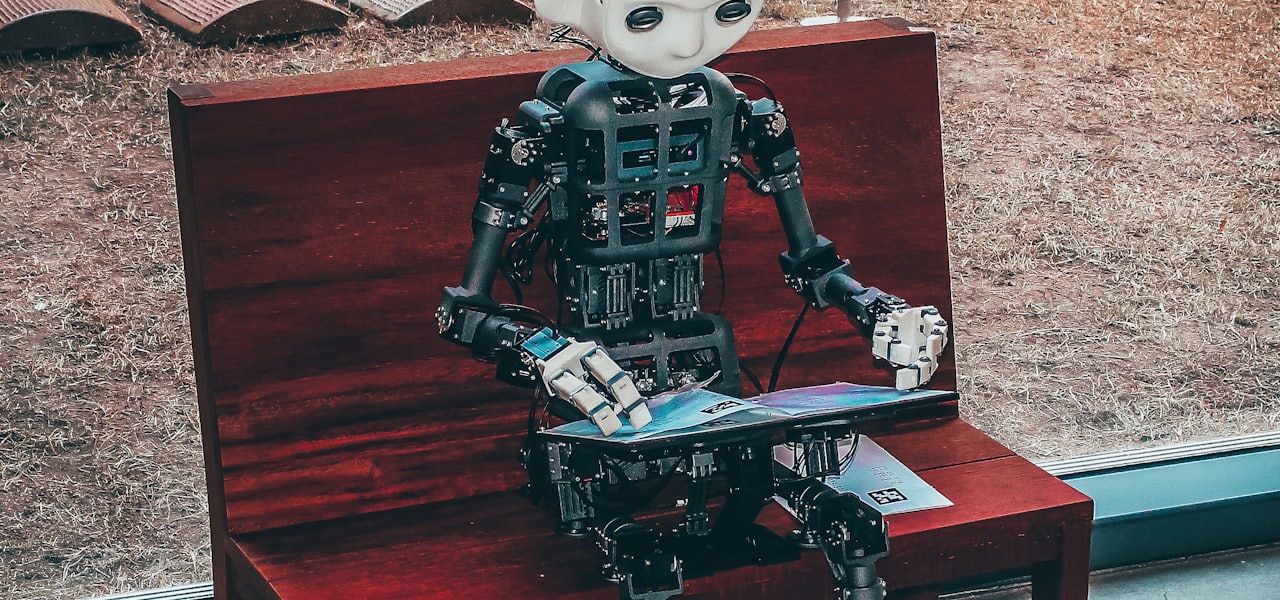
Creepiness is the state of being creepy, or causing an unpleasant feeling of fear or unease to someone and/or something. Certain traits or hobbies may make people seem creepy to others; interest in horror or the macabre might come across as 'creepy', and often people who are perverted or exhibit predatory behavior are called 'creeps'. The internet, especially some functions of social media, has been described as increasingly creepy. Adam Kotsko has compared the modern conception of creepiness to the Freudian concept of unheimlich. The term has also been used to describe paranormal or supernatural phenomena. Some people have phobias which are irrational fears, which can make them perceive something as creepy. == History and studies == "Creepiness" is subjective: for example some dolls have been described as creepy, while what makes something "creepy" or "strange" to someone might seem normal to someone else. The adjective "creepy", referring to a feeling of creeping in the flesh, was first used in 1831, but it was Charles Dickens who coined and popularized the term "the creeps" in his 1849 novel David Copperfield. In the 20th century, association was made between involuntary celibacy and creepiness. The concept of creepiness has only recently been formally addressed in social media marketing. The sensation of creepiness has only recently been the subject of psychological research, despite the widespread colloquial use of the word throughout the years. Francis T. McAndrew of Knox College is the first psychologist to do an empirical study on creepiness. == Causes == The state of creepiness has been associated with "feeling scared, nervous, anxious or worried", "awkward or uncomfortable", "vulnerable or violated" in a study conducted by Watt et al. This state arises in the presence of a creepy element, which can be an individual or, as recently observed, new technologies. === Individuals === Creepiness can be caused by the appearance of an individual. Another study investigated the characteristics that make people creepy. Creepy people were thought to be more often male than female by an overwhelming majority of participants (around 95% of both male and female participants). Another study conducted by Watt et al. also found that participants associated the ectomorphic body type (more linear) with creepiness, more than the other two body types (51% vs mesomorphic, 24% and endomorphic, 23%). Other cues of creepiness included low hygiene, especially according to female participants, and a disheveled appearance. Participants also identified the face as an area with potentially creepy features: in particular the eyes and the teeth. Both of those physical features were deemed creepy not only for their unpleasant appearance (ex. squinty eyes or crooked teeth) but also for the movements and expressions they engaged it (ex. darting eye movements and odd smiles). In fact, appearance does not seem to be the only factor making an individual creepy: behaviors provide cues as well. Behaviors such as "being unusually quiet and staring (34%), following or lurking (15%), behaving abnormally (21%), or in a socially awkward, "sketchy" or suspicious way (20%)" are all contributing to a feeling of creepiness, as described by Watt et al.'s study. === Technology === In addition to other individuals, new technologies, such as marketing's targeted ads and AI, have been qualified as creepy. A study by Moore et al. described what aspect of marketing participants considered creepy. The main three reasons are the following: using invasive tactics, causing discomfort and violating of norms. Invasive tactics are practiced by marketers that know so much about the consumer that the ads are "creepily" personalized. Secondly, some ads create discomfort by making the consumer question "the motives of the company advertising the product". Finally, some ads violate social norms by having inappropriate content, for example by unnecessarily sexualizing it. It is marketing's extensive knowledge used in an improper way, together with a certain loss of control over our data, that creates a feeling of creepiness. Another creepy aspect of technology is human-looking AI: this phenomenon is called the uncanny valley. Humans find robots creepy when they start closely resembling humans. It has been hypothesized that the reason why they are viewed as creepy is because they violate our notion of how a robot should look. A study focusing on children's responses to this phenomenon found evidence to support the hypothesis. == Evolutionary explanation == Several studies have hypothesized that creepiness is an evolutionary response to potentially dangerous situations. It could be linked to a mechanism called agent detection which makes individuals expect malignant agents to be responsible for small changes in the environment. McAndrew et al. illustrates the idea with the example of a person hearing some noises while walking in a dark alley. That person would go in high alert, fearing that some dangerous individual was there. If that was not the case the loss would be small. If, on the other hand, a dangerous individual was actually in the alley and the person had not been alerted by this creepy feeling, the loss could have been significant. Creepiness would therefore serve the purpose of alerting us in situations in which the danger is not outright obvious but rather ambiguous. In this case, ambiguity both refers to the possible presence of a threat and to its nature, sexual or physical for example. Creepiness "may reside in between the unknowing and the fear" in the sense that individuals experiencing it are unsure if there truly is something to fear or not. Creepy characteristics are not simply caused by threat potential: in fact, ectomorphic body types are not the most powerful bodies and facial expressions are not a proxy of physical strength either. Therefore, creepiness is not only related to how threatening a characteristic is, in the sense of how dangerous and strong the individual can be. There are more facets to consider. Another characteristic of creepiness is unpredictable behavior. Unpredictability links back to this idea of ambiguity. When an individual is unpredictable it is not possible to tell when their behavior will turn violent: this adds to the ambiguity of a potentially dangerous situation. This theory is endorsed by studies. Not only is unpredictability directly listed as a creepy characteristic, but other behaviors, such as norm-breaking behaviors are indirectly linked with unpredictability. Such behaviors show that the individual does not conform to some social standards others would expect in a given situation. For example, the aforementioned staring at strangers or lack of hygiene—behaviors that make us uneasy or creeped out because they do not fit the norm and therefore are not expected. More generally, participants tended to define creepiness as "different" in the sense of not behaving, or looking, socially acceptable. Such differences point towards a "social mismatch". Humans have a natural system of detection of such mismatch: a physical feeling of coldness. When an individual is creeped out, they report feeling those "cold chills". This phenomenon has been studied by Leander et al, with relation to nonverbal mimicry in social interactions, meaning the unintentional copying of another's behavior. Inappropriate mimicry may leave a person feeling like something is off about the other. Absence of non-verbal mimicry in a friendly interaction, or the presence of it in a professional setting, raises suspicion as it does not follow the relevant social norms. Individuals are left wondering what other unusual behavior the other might engage in.
Image registration
Image registration is the process of transforming different sets of data into one coordinate system. Data may be multiple photographs, data from different sensors, times, depths, or viewpoints. It is used in computer vision, medical imaging, military automatic target recognition, and compiling and analyzing images and data from satellites. Registration is necessary in order to be able to compare or integrate the data obtained from these different measurements. == Algorithm classification == === Intensity-based vs feature-based === Image registration or image alignment algorithms can be classified into intensity-based and feature-based. One of the images is referred to as the target, fixed or sensed image and the others are referred to as the moving or source images. Image registration involves spatially transforming the source/moving image(s) to align with the target image. The reference frame in the target image is stationary, while the other datasets are transformed to match to the target. Intensity-based methods compare intensity patterns in images via correlation metrics, while feature-based methods find correspondence between image features such as points, lines, and contours. Intensity-based methods register entire images or sub-images. If sub-images are registered, centers of corresponding sub images are treated as corresponding feature points. Feature-based methods establish a correspondence between a number of especially distinct points in images. Knowing the correspondence between a number of points in images, a geometrical transformation is then determined to map the target image to the reference images, thereby establishing point-by-point correspondence between the reference and target images. Methods combining intensity-based and feature-based information have also been developed. === Transformation models === Image registration algorithms can also be classified according to the transformation models they use to relate the target image space to the reference image space. The first broad category of transformation models includes affine transformations, which include rotation, scaling, translation and shearing. Affine transformations are global in nature, thus, they cannot model local geometric differences between images. The second category of transformations allow 'elastic' or 'nonrigid' transformations. These transformations are capable of locally warping the target image to align with the reference image. Nonrigid transformations include radial basis functions (thin-plate or surface splines, multiquadrics, and compactly-supported transformations), physical continuum models (viscous fluids), and large deformation models (diffeomorphisms). Transformations are commonly described by a parametrization, where the model dictates the number of parameters. For instance, the translation of a full image can be described by a translation vector parameter. These models are called parametric models. Non-parametric models on the other hand, do not follow any parameterization, allowing each image element to be displaced arbitrarily. There are a number of programs that implement both estimation and application of a warp-field. It is a part of the SPM and AIR programs. === Transformations of coordinates via the law of function composition rather than addition === Alternatively, many advanced methods for spatial normalization are building on structure preserving transformations homeomorphisms and diffeomorphisms since they carry smooth submanifolds smoothly during transformation. Diffeomorphisms are generated in the modern field of Computational Anatomy based on flows since diffeomorphisms are not additive although they form a group, but a group under the law of function composition. For this reason, flows which generalize the ideas of additive groups allow for generating large deformations that preserve topology, providing 1-1 and onto transformations. Computational methods for generating such transformation are often called LDDMM which provide flows of diffeomorphisms as the main computational tool for connecting coordinate systems corresponding to the geodesic flows of Computational Anatomy. There are a number of programs which generate diffeomorphic transformations of coordinates via diffeomorphic mapping including MRI Studio and MRI Cloud.org === Spatial vs frequency domain methods === Spatial methods operate in the image domain, matching intensity patterns or features in images. Some of the feature matching algorithms are outgrowths of traditional techniques for performing manual image registration, in which an operator chooses corresponding control points (CP) in images. When the number of control points exceeds the minimum required to define the appropriate transformation model, iterative algorithms like RANSAC can be used to robustly estimate the parameters of a particular transformation type (e.g. affine) for registration of the images. Frequency-domain methods find the transformation parameters for registration of the images while working in the transform domain. Such methods work for simple transformations, such as translation, rotation, and scaling. Applying the phase correlation method to a pair of images produces a third image which contains a single peak. The location of this peak corresponds to the relative translation between the images. Unlike many spatial-domain algorithms, the phase correlation method is resilient to noise, occlusions, and other defects typical of medical or satellite images. Additionally, the phase correlation uses the fast Fourier transform to compute the cross-correlation between the two images, generally resulting in large performance gains. The method can be extended to determine rotation and scaling differences between two images by first converting the images to log-polar coordinates. Due to properties of the Fourier transform, the rotation and scaling parameters can be determined in a manner invariant to translation. === Single- vs multi-modality methods === Another classification can be made between single-modality and multi-modality methods. Single-modality methods tend to register images in the same modality acquired by the same scanner/sensor type, while multi-modality registration methods tended to register images acquired by different scanner/sensor types. Multi-modality registration methods are often used in medical imaging as images of a subject are frequently obtained from different scanners. Examples include registration of brain CT/MRI images or whole body PET/CT images for tumor localization, registration of contrast-enhanced CT images against non-contrast-enhanced CT images for segmentation of specific parts of the anatomy, and registration of ultrasound and CT images for prostate localization in radiotherapy. === Automatic vs interactive methods === Registration methods may be classified based on the level of automation they provide. Manual, interactive, semi-automatic, and automatic methods have been developed. Manual methods provide tools to align the images manually. Interactive methods reduce user bias by performing certain key operations automatically while still relying on the user to guide the registration. Semi-automatic methods perform more of the registration steps automatically but depend on the user to verify the correctness of a registration. Automatic methods do not allow any user interaction and perform all registration steps automatically. === Similarity measures for image registration === Image similarities are broadly used in medical imaging. An image similarity measure quantifies the degree of similarity between intensity patterns in two images. The choice of an image similarity measure depends on the modality of the images to be registered. Common examples of image similarity measures include cross-correlation, mutual information, sum of squared intensity differences, and ratio image uniformity. Mutual information and normalized mutual information are the most popular image similarity measures for registration of multimodality images. Cross-correlation, sum of squared intensity differences and ratio image uniformity are commonly used for registration of images in the same modality. Many new features have been derived for cost functions based on matching methods via large deformations have emerged in the field Computational Anatomy including Measure matching which are pointsets or landmarks without correspondence, Curve matching and Surface matching via mathematical currents and varifolds. == Uncertainty == There is a level of uncertainty associated with registering images that have any spatio-temporal differences. A confident registration with a measure of uncertainty is critical for many change detection applications such as medical diagnostics. In remote sensing applications where a digital image pixel may represent several kilometers of spatial distance (such as NASA's LANDSAT imagery), an uncertain image registration can mean that a solution could b
Metigo
metigo is a software application that performs image-based modelling and close range photogrammetry. It produces rectified imagery plans, true ortho-projections on planar, cylindric and conic surfaces, 3D photorealistic models, measurements from photography and mappings on a photographic base for uses in the cultural heritage sector, mainly conservation. == Products == The metigo product line currently consists of the mapping software metigo MAP, the stereo-photogrammetry modeling software metigo 3D, the free viewer metigo VIEW. These products are all standalone and are not depending on other software, such as AutoCAD. === metigo MAP === metigo MAP is mainly used to map findings and conservation measured on a uniform metric photographic base. Therefore, photos of planar surfaces can be rectified based on geometrical informations, e.g. height and width of a rectangle, or cartesian coordinates measured by total station. Beside rectified imagery several other metric mapping bases can be imported and used: true ortho-projections; scaled scans of plans and plots; CAD-files; 3D models, such as digital surface models (DSM) produced by stereo-photogrammetry, SfM or 3D scanning. metigo MAP 's strong point is that rectified imagery taken with different techniques (visual light, sided light, IR, UV, UV-fluorescence, X-ray), historic images and photos taken at various stages of the conservation process can be superimposed and evaluated mutually. The user can allocate several attributes, such as different conservation measures and damage classes, to the mapped geometries. The mappings can be analysed by geometries as well as by user-defined attributes at any stage of the project. metigo MAP targets mainly conservators in different cultural heritage fields. Using it no specialist knowledge of surveying and photogrammetric techniques are needed. === metigo 3D === metigo 3D is a stereo-photogrammetric kit that allows to calculate bundle adjustments (axios3D), create high-quality 3D point clouds using multiple stereo photo pairs combined with metric survey data, mesh these point clouds, texture the meshes with high-resolution image data to create photo-realistic models, ortho-project orientated images on digital surface models (DSM) on planes and best-fit cylinders and cones, create unwrappings and developed views of curved surfaces, analyse deformations of 3D surfaces. metigo 3D targets metric survey specialists working in the cultural heritage sector. == Supported file formats == metigo has the ability to read the following formats: images: JPEG (.jpg), Tiff (.tif), Bitmaps (.bmp), CompuServ (.gif), Encapsualated Postscript (.eps), PCX (.pcx), Photo-CD (.pcd), PICT (.pcd), PNG (.png), Targa (.tga), RAW-format of several camera brands. CAD: DBX, DXF, DWG. 3D: many ASCII-formats (.stl, .wrl, etc.) point data: format editor for ASCII files. == Supported languages == Currently, an English and German version of the software is supported. For metigo MAP beside these a French and Polish GUI is offered for sale. == Applications == The main applications of metigo are: conservation in the cultural heritage context, e.g. stone conservation paintings tapestry etc. architecture, archaeology, many other are possible, e.g. forensics. == History == The first public release of metigo was in 2000.
Comparison of raster graphics editors
Raster graphics editors can be compared by many variables, including availability. == List == == General information == Basic general information about the editor: creator, company, license, etc. == Operating system support == The operating systems on which the editors can run natively, that is, without emulation, virtual machines or compatibility layers. In other words, the software must be specifically coded for the operation system; for example, Adobe Photoshop for Windows running on Linux with Wine does not fit. == Features == == Color spaces == == File support ==
Fling (social network)
Fling was a social media app available for IOS and Android. It was founded in 2014 by Marco Nardone and was taken offline in August 2016. == Overview == In 2012, Marco Nardone founded the startup Unii and launched Unii.com, a social network intended for students in the UK. While working on this service, Nardone had the idea for a messaging service where pictures could be sent to strangers in January 2014. The app Fling was then developed and released between March and July 2014. After a month, it already had 375,000 downloads and 180,000 active users on iOS. Users were able to take pictures inside the app and send them to 50 random people all over the world. The recipient could then choose to answer via chat or reply by sending a picture themselves. The app was used by many users as a medium to exchange sexually explicit pictures and for sexting with strangers. This led to the app being removed from the App Store in June 2015. In the 19 days that followed, flings developers rewrote the App almost completely from scratch, working around the clock. The feature to message random strangers was removed, and the app was readmitted into the App Store as a messenger App resembling Snapchat. But the redesigned Application did not have the success of its predecessor. The funding ran out and the parent company Unii went bankrupt. The company was not able to pay their content moderation team anymore, leading to a new surge of pornographic content on the App. Shortly after that, the Social Network was taken offline in August 2016. It has been inactive since. During the 2 years Fling was online, $21 million was raised from investors while generating no revenue at all. Of this $21 million (£16.5m), £5 million came from Nardone's father. == Allegations against CEO == Former employees made multiple allegations against Marco Nardone, the Founder and CEO of Unii and Fling. According to these claims, he behaved erratic and abusive, throwing "things across the office". He hired his girlfriend as the head of human resources to handle issues between him and his staff. Employees who left the company often had "some part of their pay held back". According to the reports, he also spent the money raised from investors irresponsibly, having no clear concept of a budget. Some of that money was used on expensive restaurants in London, a luxurious office for CEO Nardone and advertisements for Fling on Twitter and Facebook. Nardone also spent time partying in Ibiza with two employees, while the developer team in London frantically tried to get Fling back online after it being removed from the App Store. In December 2017 he pleaded guilty to assaulting his girlfriend at a domestic violence court.
NetMiner
NetMiner is an all-in-one software platform for analyzing and visualizing complex network data, based on Social Network Analysis (SNA). Originally released in 2001, it supports research and education in a wide range of domains through interactive and visual data exploration. This tool allows researchers to explore their network data visually and interactively, and helps them to detect underlying patterns and structures of the network. It has also been recognized for its comprehensive features and user-friendly interface in comparative reviews of SNA software packages. == Features == === Integrated Data Environment === NetMiner supports unified management of diverse data types—including network (nodes and links), tabular, and unstructured text data—within a single platform. This enables users to perform the entire analysis workflow seamlessly without switching between tools. NetMiner also supports a wide range of analytical methods, allowing users to derive new insights by combining multiple approaches. Analytical results can be saved and reused across workflows(Add to Dataset) Graph and Network Analysis: Includes Centrality, Community Detection, Blockmodeling, and Similarity Measures. Machine learning: Provides algorithms for regression, classification, clustering, ensemble modeling and XAI(Explainable AI) Graph Neural Networks (GNNs): Supports models such as GraphSAGE, GCN, and GAT to learn from both node attributes and graph structure. Natural language processing (NLP): Uses pretrained deep learning models to analyze unstructured text, including named entity recognition and keyword extraction. Text mining and Text network analysis: Supports construction of word co-occurrence networks and topic modeling using LDA, BERTopic, enabling identification of thematic patterns and semantic structures in text data. Data Visualization: Offers advanced network visualization features, supporting multiple layout algorithms. Analytical outcomes such as centrality or community detection can be directly reflected in the network map via node size, color, and position, enhancing intuitive understanding. === AI Assistant === NetMiner integrates with external large language models such as OpenAI GPT and Google Gemini to interpret complex analysis results in natural language, summarize key findings, and suggest next steps for exploration. === Workflow and Usability === Designed to follow the structure of real-world data analysis workflows, NetMiner adopts a hierarchical data organization (Project → Workspace → Dataset → Data Item). Its web-based user interface improves clarity and reduces complexity. NetMiner 5 supports Windows 10 or higher and macOS 11 or later with M1 chip. Both academic and commercial licenses are available. == Extension == NetMiner Extension is small program to extend the functionality of NetMiner. In other words, it enables you to customize NetMiner according to your needs. By adding ‘NetMiner Extension’, you can expand your research. === Web Data Collection === NetMiner allows users to collect data from services such as YouTube, OpenAlex, Springer, and KCI via Open APIs. Collected data is automatically preprocessed and transformed to fit NetMiner’s internal structure, requiring no additional coding or external tools. SNS Data Collector: It collects social media data from YouTube, which has a large number of social media users worldwide. Biblio Data Collector: It collects the bibliographic data from Springer, OpenAlex, and KCI essential for research trend analysis. == File formats == === NetMiner data file format === .NMF === Importable/exportable formats === Plain text data: .TXT, .CSV Microsoft Excel data: .XLS, .XLSX Unstructured text data: .TXT, .CSV, .XLS(X) ※ NetMiner 4 only NetMiner 2 data: .NTF UCINet data: .DL, .DAT Pajek data: .NET, .VEC, .CLU, .PER StOCNET data file: .DAT Graph Modelling Language data: .GML(importing only) Related software UCINET Pajek Gephi StoCNET == Data structure == === Hierarchy of NetMiner data structure === NetMiner 5 supports not only graph data composed of nodes and links, but also tabular and unstructured data without fixed schema or identifiers. This enables users to easily import a wide variety of raw and unstructured data suitable for machine learning applications. Within a single workspace, users can manage node sets, link sets, and structured/unstructured data simultaneously. Multiple graph layers under a node set can be organized in a tree structure, allowing for intuitive understanding of the data currently being analyzed. == Release history == The first version of NetMiner was released on Dec 21, 2001. There have been five major updates from 2001. === NetMiner 5 === Released on June 9, 2025. NetMiner 5 retains the core features and no-code concept of NetMiner 4, but has evolved by integrating cutting-edge AI technologies. AI Assistant, Personal Analytics Tutor Support for Graph, Structured, and Unstructured Data Graph Analytics / Social Network Analysis Machine Learning(M/L) & XAI Graph Machine Learning(GML): Graph Neural Network Text Mining: Natural Language Processing(NLP), Text Network, Topic Modeling Data Visualization === NetMiner 4 (2011) === Latest version is 4.5.1. Introduced Python scripting, encrypted NMF format, semantic analysis tools (word cloud, topic modeling), and Extension - Data Collector. === NetMiner 3 (2007) === Enhanced scalability, integrated analysis-visualization modules, and DB import from Oracle, MS SQL. === NetMiner 2 (2003) === Improved statistical and network measures, visualization algorithms, and external data import modules.
Creately
Creately is a SaaS visual collaboration tool with diagramming and design capabilities designed by Cinergix. The application is mostly known for creating flowcharts, organization charts, project charts, UML diagrams, mind maps, and other business visuals. == History == The initial beta version of Creately was released by Chandika Jayasundara. Hiraash Thawfeek, Nick Foster and Charanjit Singh joined the project in the same year. Chandika Jayasundara is CEO of Cinergix. The headquarters of the company is located at Mentone, Victoria, Australia. == Features and reception == Creately provides predefined templates and diagram elements for incorporating in the projects. It provides drag and drop feature with which both predefined and custom made shapes can be included to build the desired diagram while the same workspace can be shared with multiple persons for collaboration. Some experts have reviewed the application by commenting on its lacking in accessible integration options as its downside. The company claims Creately to have integration feature with Slack, Confluence while not having the integration with Zapier and OneDrive yet. It is compatible with Google Drive and Dropbox. The software is available as both freemium and paid option.